
The Tribit PocketGo outperforms the JBL Go 4 with better battery life, more powerful output, and advanced waterproofing at a lower price point.
The Tribit PocketGo and JBL Go 4 both target buyers looking for a portable Bluetooth speaker, but they approach that goal from different angles. The PocketGo is designed with practicality in mind, emphasizing long battery life, rugged waterproofing, and flexible playback options that appeal to travelers and outdoor users. Features like TF card support and extended endurance suggest a speaker meant to function independently of a phone for long periods.
The JBL Go 4 focuses on compact design, ease of use, and integration into JBL’s broader ecosystem, including Auracast support and app-based EQ control. It’s positioned as a simple, lifestyle-oriented speaker for casual listening rather than extended trips or demanding environments.
Understanding these priorities upfront makes it easier to see why the two speakers feel different in everyday use, despite their similar size.
This comparison breaks down where each speaker excels, where compromises appear, and which one ultimately offers the better overall value for buyers.
| Feature | Tribit PocketGo | JBL Go 4 |
| Bluetooth Version | Bluetooth 6.0 | Bluetooth 5.3 |
| Output Power | 7W | 4.2W |
| Battery Life | Up to 20 hours (rated at moderate volume) | Up to 7 hours (with additional boost mode available) |
| Waterproof Rating | IP68 (dustproof, waterproof, floats) | IP67 (waterproof and dustproof) |
| Size Class | Pocket-size, travel-friendly | Pocket-size, travel-friendly |
| Stereo Pairing | Yes (True Wireless Stereo pairing) | Yes (Auracast support) |
| Offline Playback | Yes (TF / microSD card support) | No |
| Companion App | Tribit App | JBL Portable App (EQ and controls) |
Design, size, and portability
Both speakers are designed to disappear into your daily carry. They’re compact, lightweight, and clearly meant to be used one-handed.
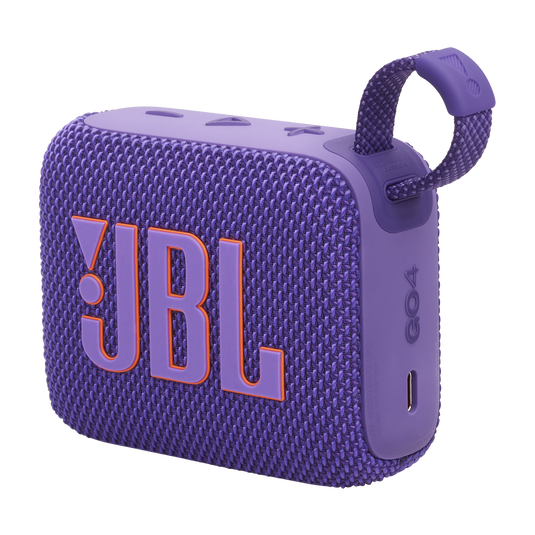
The JBL Go 4 sticks closely to JBL’s familiar design: rounded edges, a fabric-wrapped grille, bold color options, and a built-in loop that makes it easy to clip onto a bag. It looks and feels like a lifestyle accessory, which is very much JBL’s intent.
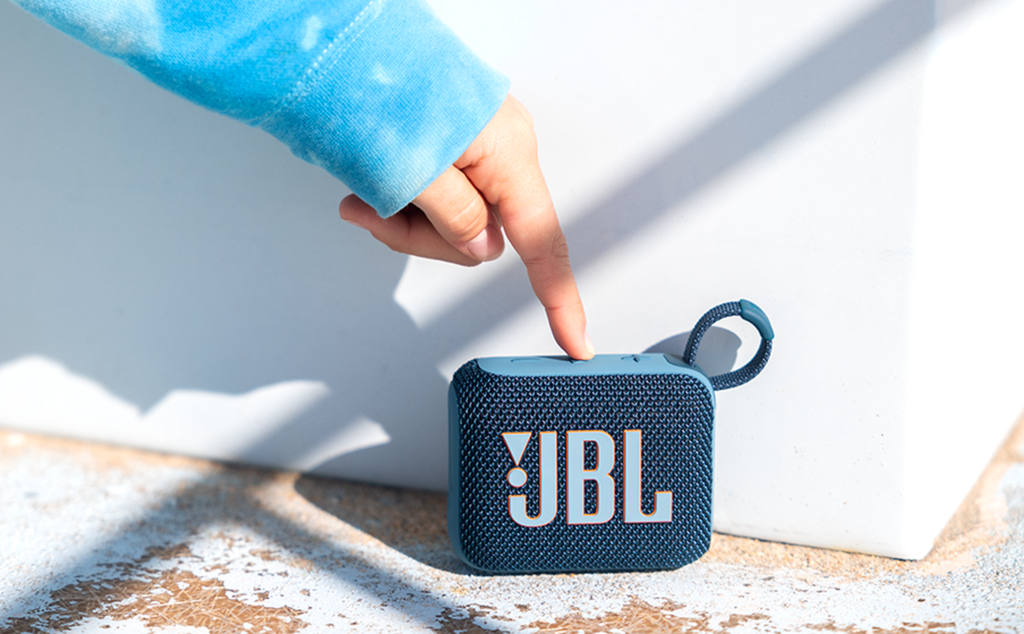
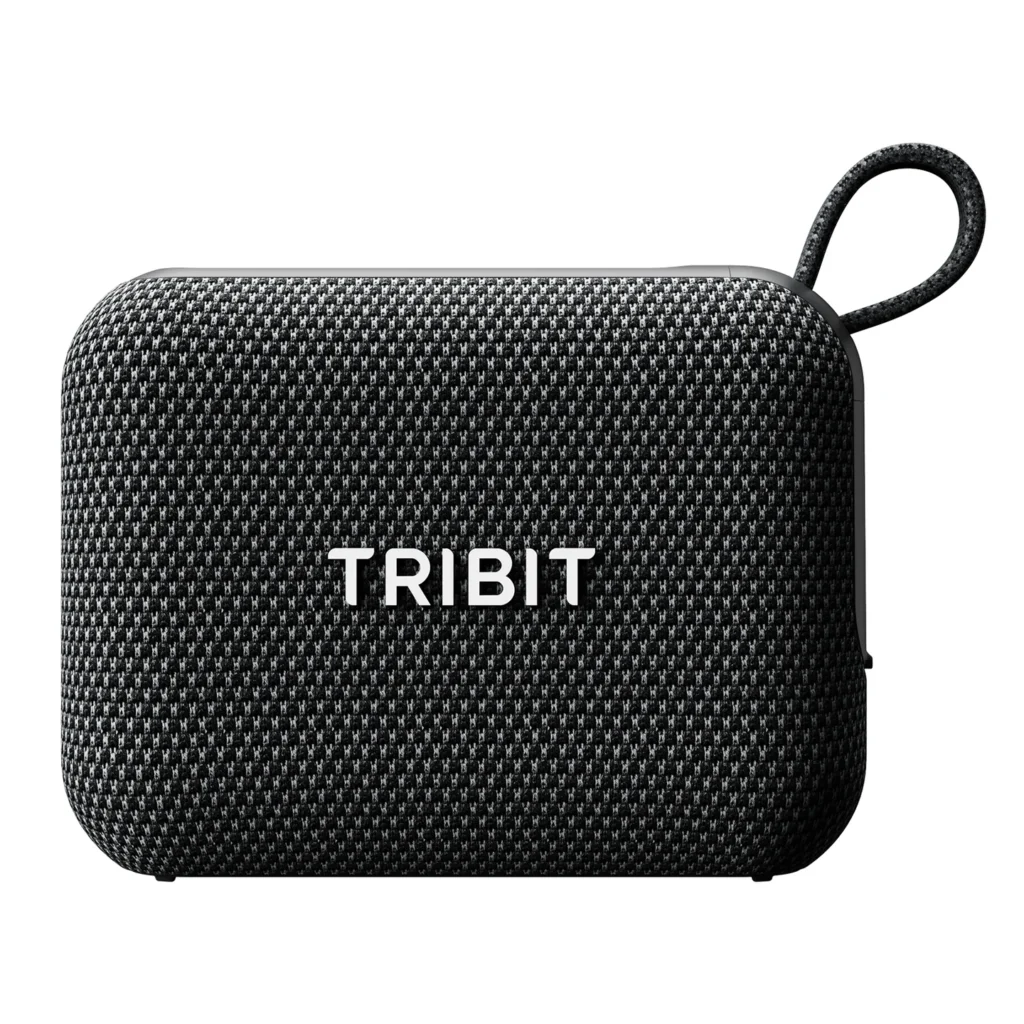
The Tribit PocketGo looks more utilitarian. Its design prioritizes durability and outdoor use rather than fashion. The body is rugged, with a shape that feels purpose-built for travel and rougher environments.
Durability and waterproofing for outdoor use
The Tribit PocketGo has an IP68 rating, meaning it’s fully dustproof and can survive submersion in water. It’s also designed to float, which makes it better for beach trips or poolside use.
The JBL Go 4 is rated IP67. It’s also waterproof and dustproof, but with slightly lower water resistance compared to IP68. For most everyday scenarios, rain, splashes, and sand, this mini Bluetooth speaker is more than sufficient.
Battery life and charging expectations
Tribit rates the PocketGo for up to 20 hours of playback at moderate volume, which is exceptional for a speaker this small. That kind of endurance makes it viable for multi-day trips without needing to think about charging.
The JBL Go 4 is rated for up to 7 hours, with an additional boost mode that can extend playback slightly by reducing output. Even with that considered, it’s in “single-day use” territory.
If you’re the type of user who charges every night, this may not matter. If you travel frequently or want something you can throw in a bag and forget about, then you would be better off with the Tribit PocketGo.
Connectivity and Bluetooth features
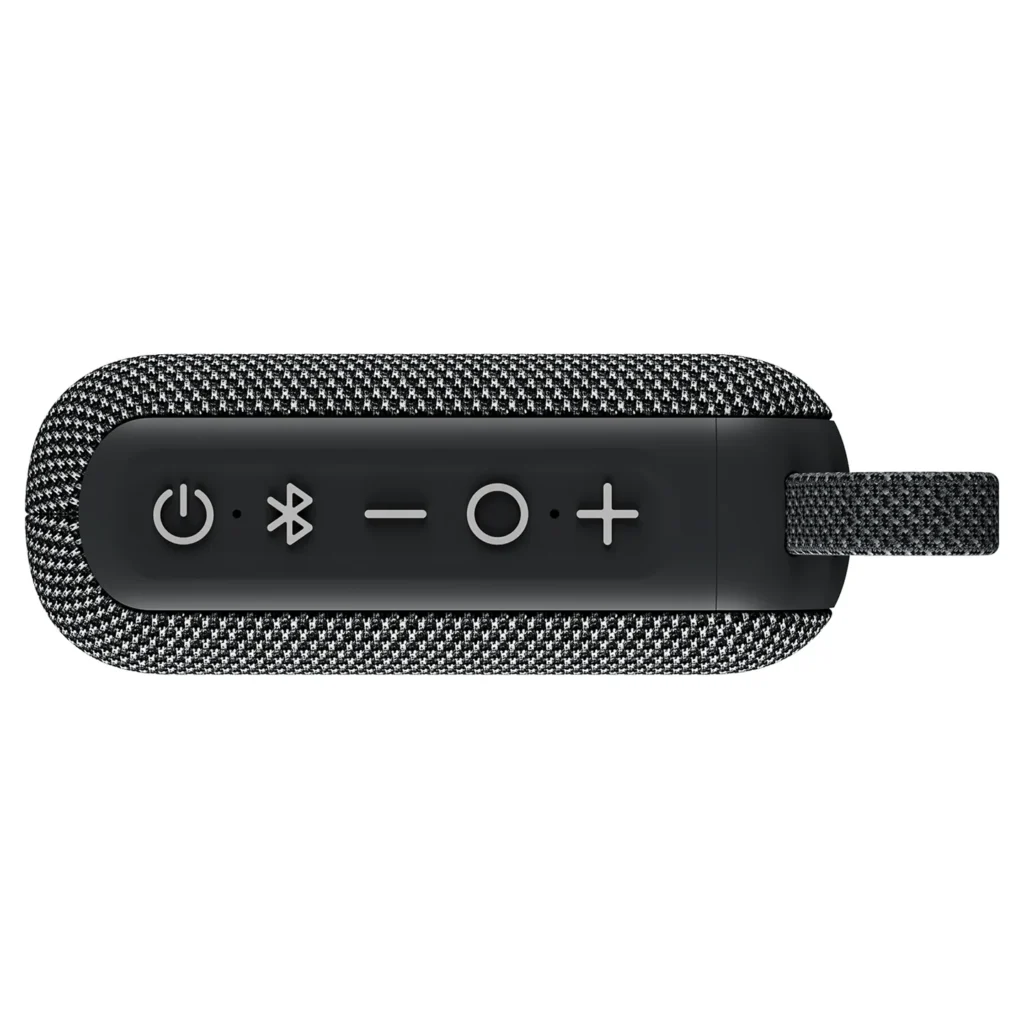
The Tribit PocketGo uses Bluetooth 6.0, which is newer on paper and designed for improved efficiency and stability. It also supports true wireless stereo (TWS) pairing, allowing you to link two PocketGo speakers together for a wider soundstage.
The JBL Go 4 runs Bluetooth 5.3 and has Auracast support, which allows it to connect to compatible broadcast audio streams and other Auracast-enabled devices.
Both speakers support companion apps, giving access to EQ adjustments and basic customization.
TWS pairing benefits users who want to scale up sound later. Auracast benefits users already invested in JBL’s ecosystem or future-proof features.
Playback options and everyday flexibility
The PocketGo supports TF (microSD) card playback, meaning you can load music directly onto the speaker and play it without a phone or Bluetooth connection. For travelers, hikers, or anyone trying to conserve phone battery or avoid connectivity altogether, this is an underrated feature.
The JBL Go 4 relies entirely on Bluetooth. There’s no offline playback option.
Tribit also included a built-in microphone and voice assistant support, adding to its flexibility as an everyday utility speaker.
Output power and what it suggests about sound
We’ll keep this strictly factual.
- Tribit PocketGo: 7W output
- JBL Go 4: 4.2W output
Higher wattage doesn’t automatically mean better sound, but in this category, it usually translates to better volume capability. Both speakers are designed for close-range listening, but the Tribit has more electrical power available to work with.
App support and ecosystem
Both speakers support companion apps that allow EQ adjustments and firmware updates.
JBL’s app integrates neatly with the company’s broader product lineup, which may matter if you already own JBL speakers or headphones.
Tribit’s app is simpler but functional, focused on EQ modes and speaker management.
Neither app is a deciding factor on its own, but both add value compared to app-less budget speakers.
Price, value, and buying context
When comparing features dollar-for-dollar, the Tribit PocketGo consistently offers more: longer battery life, higher output power, offline playback, and higher waterproofing.
The JBL Go 4 justifies its price through brand recognition, refined design, and ecosystem features like Auracast.
Verdict: Which one should you buy?
If you’re deciding between these two speakers purely on features and flexibility, the Tribit PocketGo is the better overall speaker for most people.
It lasts significantly longer on a charge, offers more playback options, delivers higher output power, and is better suited to travel and outdoor use.
The JBL Go 4 still makes sense if you value JBL’s design language, want Auracast support, or prefer staying within the JBL ecosystem. It’s simple, polished, and easy to recommend for light everyday use.
Note: Is Tribit a Good Brand Compared to JBL?
Tribit may not have the decades-long brand recognition of JBL, but within the portable Bluetooth speaker space, it has established itself as a value-focused audio brand with a strong emphasis on practical features. Tribit’s products, like the PocketGo, prioritize battery life, durability, and everyday usability
For buyers deciding between the two, the takeaway is straightforward: Tribit is a credible and reliable brand for portable Bluetooth speakers, while JBL remains the safer choice for those who value brand familiarity and ecosystem integration.
FAQs
Is the Tribit PocketGo louder than the JBL Go 4?
Based on rated output power, the Tribit PocketGo offers higher wattage than the JBL Go 4, which suggests greater volume headroom in similar usage conditions.
Which speaker is better for travel, the Tribit PocketGo or the JBL Go 4?
The Tribit PocketGo is better suited for travel thanks to its longer battery life, higher waterproof rating, and support for offline playback via a TF card.
Does the JBL Go 4 support stereo pairing?
The JBL Go 4 supports Auracast, allowing it to connect with compatible broadcast audio sources and devices. The Tribit PocketGo supports true wireless stereo pairing with another PocketGo speaker.
Is the Tribit PocketGo waterproof enough for outdoor use?
Yes. The Tribit PocketGo carries an IP68 rating, meaning it is fully dustproof and designed to withstand submersion in water, making it suitable for outdoor and travel use.
Related Posts
- Tribit Pocket Go brings Bluetooth 6.0 and MicroSD playback to the budget sector
- Connected Fidelity launches CF-1010 9-Inch tonearm
- Sourcepoint V10 Master Edition from MoFi and Andrew Jones
- AudioEngine launches new HXL portable headphone amplifier and DAC
- The Best External Equalizers Under $500 – 2025 Buying Guide